
CCT Competencies 2 \& 3: COLA Workshops + CCTI
CCT Competencies 2 \& 3: COLA Workshops + CCTI
Competency 2: Creating Effective Learning Environments
Workshop Details
Primary Workshop: COLA Workshop 3 - Promoting Student Classroom Engagement Supplementary: CCTI “Creating Effective Learning Environments” (May 8, 2025) Facilitator: Dr. Kirstin Parkin (Assistant Professor, Microbiology and Molecular Genetics)
Competency Description
Creating effective learning environments involves cultivating learning spaces that promote student success and engagement while creating inclusive environments for diverse learners. This competency addresses learning preferences, diversity, motivation, communication skills, active learning, classroom management strategies, and inclusive teaching strategies.
Workshop Experience \& Artifacts
COLA Workshop 3: Promoting Student Classroom Engagement
Through this workshop, I learned about three types of student engagement:
- Behavioral engagement: Active participation in learning activities
- Emotional engagement: Students’ connection to and interest in the material
- Cognitive engagement: Deep thinking about course concepts
CCTI: Creating Effective Learning Environments
My detailed reflection worksheet identified key skills and techniques I learned:
Skills for Inclusive Environment Creation:
- Techniques for creating inclusive classroom environments that address diverse student backgrounds and learning styles
- Methods to promote active student engagement through thoughtful discussion facilitation and questioning strategies
- Approaches to designing physical and digital learning spaces that support collaboration and knowledge construction
Classroom Management \& Dynamics:
- Strategies for establishing clear expectations and classroom norms that foster respect and participation
- Ways to incorporate student feedback into course design and delivery in real-time
- Skills for managing challenging classroom dynamics and addressing potential conflicts constructively
Materials Developed
Based on the workshops, I implemented specific strategies in MKT 327:
1. Enhanced Group Case Study Structure:
- Designed collaborative group case studies
- Required group submissions for case study analyses
- Added individual weekly reflections posted on discussion boards for accountability and personal connection
| Case Study Groups | ||||
|---|---|---|---|---|
| Case Study Groups (15) Delete | ||||
| $\square$ | Members | Assignment | Discussions | |
| $\square$ | US25-MKT-327- 734-1 | 5 | 4 | |
| $\square$ | US25-MKT-327- 734-2 | 5 | 4 | |
| $\square$ | US25-MKT-327- 734-3 | 5 | 4 | |
| $\square$ | US25-MKT-327- 734-4 | 5 | 4 | |
| $\square$ | US25-MKT-327- 734-5 | 4 | 4 | |
| $\square$ | US25-MKT-327- 734-6 | 5 | 4 | |
| $\square$ | US25-MKT-327- 734-7 | 4 | 4 | |
| $\square$ | US25-MKT-327- 734-8 | 5 | 4 |
Figure 1: Implementation of 14 collaborative groups with defined roles
Note: Shows 15 groups due to administrative adjustment for non-attending student
Group Case Study
| Topic | Threads | Posts |
|---|---|---|
| Week 1 Reflection: Nike, Mayo Clinic \& Louis Vuitton Starts Jul 1 i Includes assessment. Must post first. Instructions After completing each group case study analysis, you will submit an individual reflection (150-250 words) addressing the specific prompts for that week. These reflections should demonstrate your personal learning, critical thinking about marketing concepts, and insights gained from the group collaboration process. Choose ONE of the following prompts to address in your reflection: | ||
| Option A - Brand Strategy Analysis: Which company’s marketing strategy do you think is most sustainable long-term and why? Support your answer with specific examples from the case and marketing concepts from Chapters 1-4. Option B - Customer Value Creation: What surprised you most about how these three very different organizations (athletic apparel, healthcare, luxury goods) create customer value? How do their approaches differ, and what can other companies learn from their strategies? Option C - Group Learning Experience: How did working with your group help you understand these cases differently than if you had analyzed them alone? What insights emerged from your group discussions that enhanced your understanding of marketing principles? | 58 | 59 |
Figure 2: Individual reflection options promoting student choice and engagement
2. Student Connection Strategies:
- Used pre-course and mid-semester surveys to understand student interests and backgrounds
- Connected marketing concepts to topics students care about based on survey data
- Enhanced my awareness of student struggles through monitoring discussion board reflections
Figure 3: Pre-course and Mid-Semester survey assessing student backgrounds and learning needs
3. Structured Learning Environment Design:
- Implemented clear weekly expectations and organized course timeline
- Created opportunities for students to connect marketing theories with their own experiences through reflective activities
- Designed collaborative learning activities that develop both marketing knowledge and teamwork skills
- Incorporated regular feedback mechanisms to gauge classroom climate and make adjustments
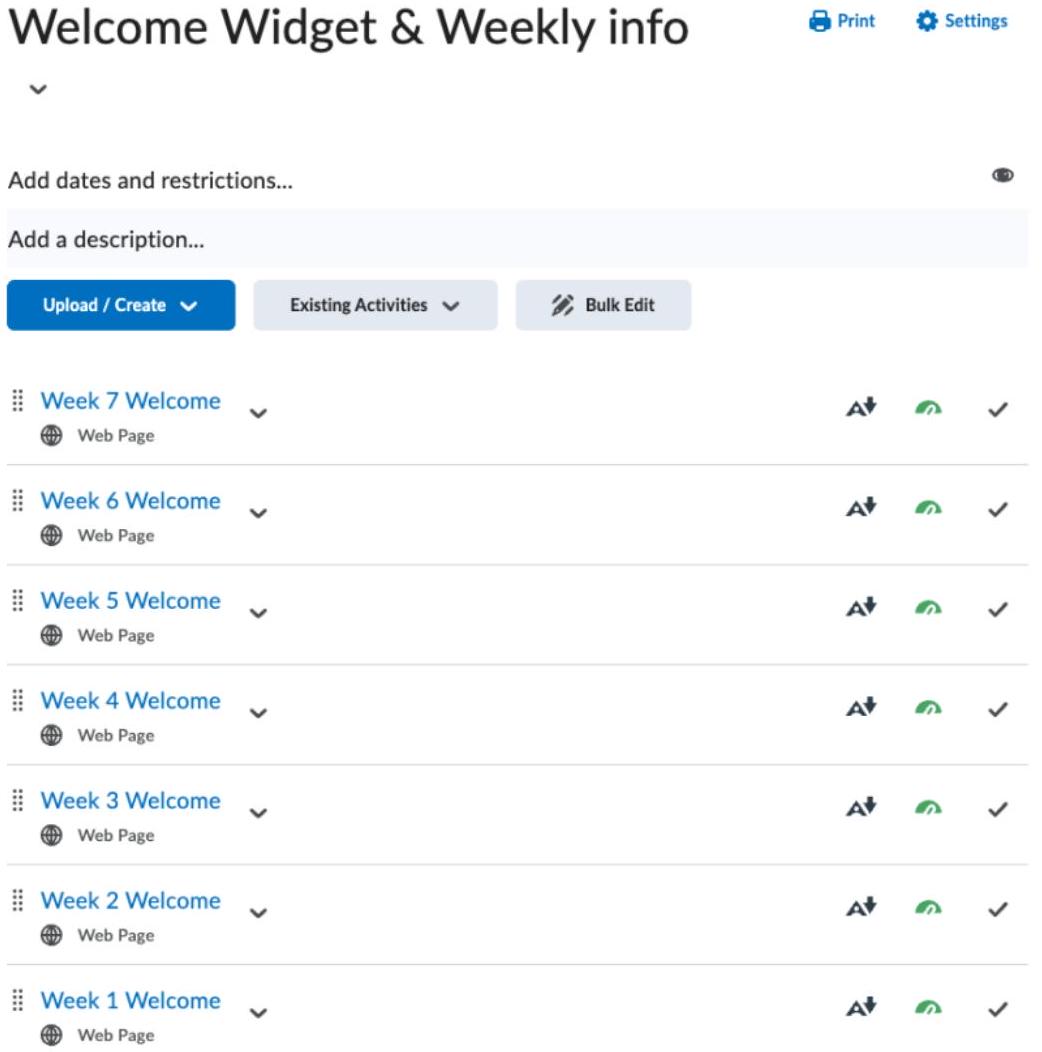
 Figure 4: Weekly welcome widget and schedule and announcements
Areas for Future Development (from my CCTI reflection):
- How to effectively balance structure and flexibility in course design for marketing courses
- Best practices for fostering meaningful peer-to-peer learning in larger marketing courses
- Methods for measuring the effectiveness of different learning environment designs
Artifact Rationale
My workshop reflections demonstrate clear understanding that effective learning environments require all three types of engagement. My implementation in MKT 327 shows how workshop concepts directly influenced my course design, creating active collaborative learning that promotes both peer interaction and individual accountability.
The combination of group work with individual discussion board reflections addresses the workshop’s core principle that “online teaching is different” and requires intentional strategies to create engagement rather than hoping students will “stay engaged” with traditional formats.
Interpretation \& Reflection
Key Learning: “I realized I need to do more to get them talking to each other” - This insight helped me understand that effective learning environments are fundamentally social and interactive, requiring instructor facilitation of peer connections.
Application to Practice: My implementation of group case studies with individual reflection requirements demonstrates practical application of behavioral engagement strategies. Using surveys to understand student interests shows attention to emotional engagement principles.
Impact on Teaching: The workshops influenced my recognition that marketing education requires community building and collaborative problem-solving rather than individual content consumption.
Evidence of Success: Student evaluation comments (“The team work building exercises,” “Collaboration”) suggest successful implementation of engagement-focused learning environment design.
Dept/College Question (TQ28C)
(TQ) What specific things were done particularly well in this course?
Comments
very organized and well put together expectations to excel in the course were clearly outlined and feedback on the assignments allowed for improvement on future assignments Collaboration Teacher was amazing with communication The team work building exercises. the communication and how its format I like how it was extremely clear what we were responsible for each week, and that it had a fair workload.
Figure 5: Student feedback confirming successful collaborative environment
Competency 3: Incorporating Technology in Your Teaching
Workshop Details
Primary Workshop: COLA Workshop 2 - Multimodality Supplementary: CCTI “Incorporating Technology in Teaching” (May 9, 2025) Facilitator: Dr. Stefanie Baier (Group presentation and exercise)
Competency Description
This competency focuses on incorporating digital technologies into teaching practices, including multimedia, distance learning, hybrid courses, and video technologies. It addresses choosing appropriate technologies for different types of courses and learners.
Workshop Experience \& Artifacts
COLA Workshop 2: Multimodality
My reflection demonstrates understanding of different teaching modalities beyond traditional online/hybrid/in-person categories. The workshop helped me think strategically about when and why to use different technological approaches.
Materials Developed
1. Strategic Modality Selection:
- Analyzed the effectiveness of live coding sessions vs. recorded alternatives from my previous experience
- Planned hybrid approaches combining synchronous sessions with asynchronous review materials
- Considered digital alternatives like Jupyter notebooks and RStudio Cloud for future courses
2. Platform Integration for Marketing Courses:
- Used D2L discussion forums for individual reflections on collaborative case study work
- Implemented multiple digital submission formats (written, video, infographic) in MKT 327
- Designed both asynchronous group collaboration and individual reflection components
Format Options:
- 200-300 words per company (600-900 words total) OR
- 3-4 minute video explanation OR
- Infographic with 200-word explanation
Group Structure: 14 groups of 5 students each
Figure 1: Technology-enabled flexible submission options 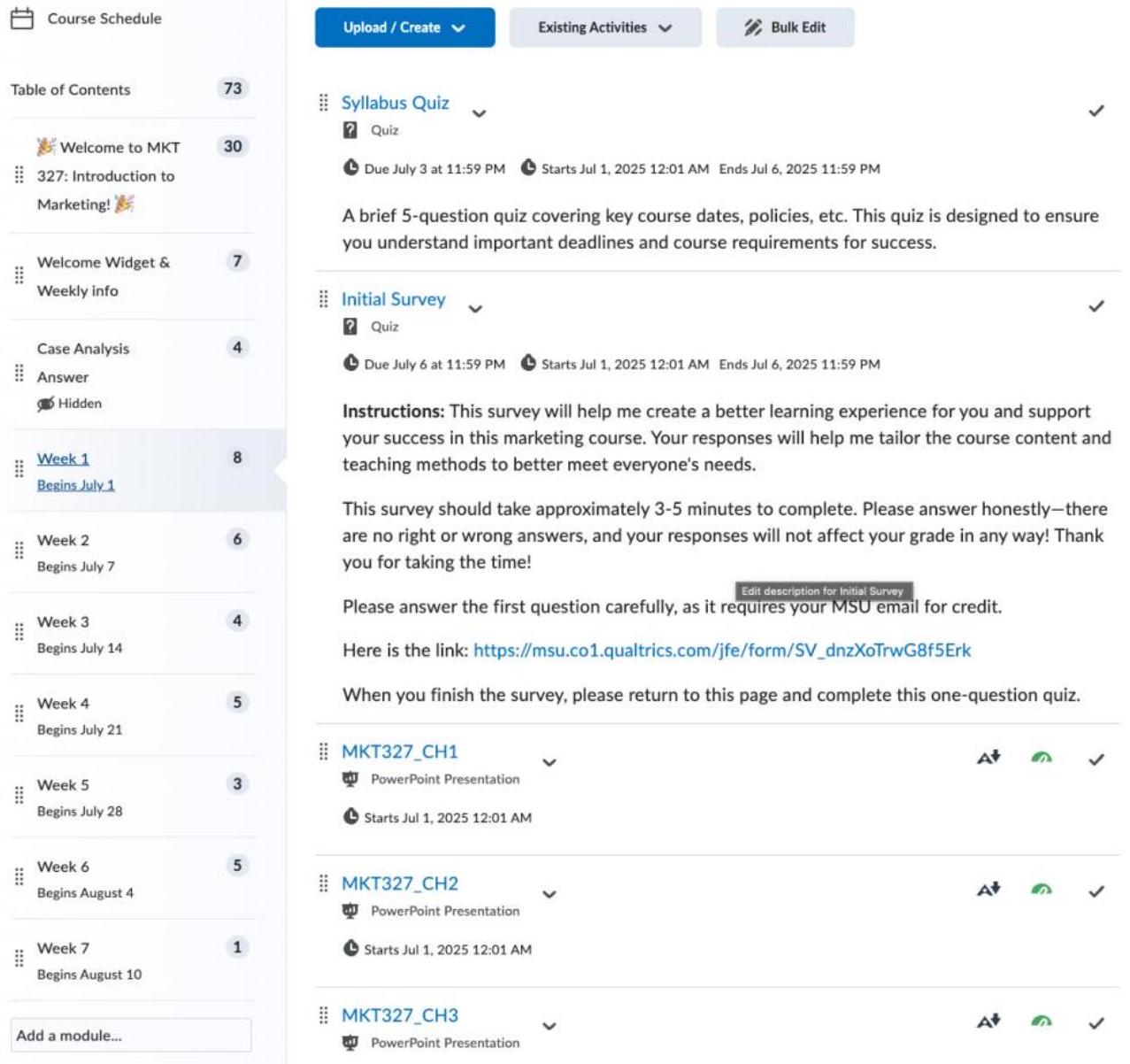
Figure 2: Well-Organized asynchronous course delivery through D2L
3. Equity-Conscious Technology Choices:
- Recognized technology access issues for international students
- Considered time zone challenges in online course design
- Balanced immediate feedback benefits with accessibility needs < Back to Manage Quizzes Exam 1
Quiz Title $\square$ Exam 1 Grade Out Of 200 points I In Grade Book Due Date
Description $\square$
Questions
Total Points 200
Select All
Preview Eq. Preview
Edits will only impact future attempts 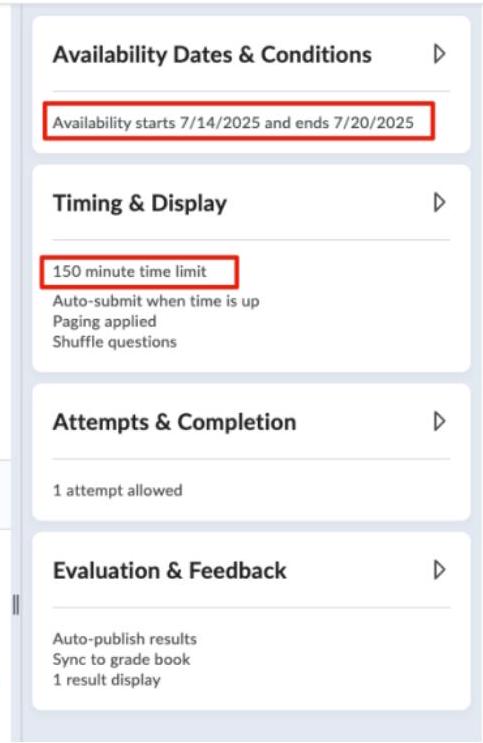
Figure 3: Flexible assessment windows supporting diverse student needs
Artifact Rationale
My multimodality reflection shows understanding that technology choices should serve pedagogical purposes rather than be applied for their own sake. My analysis of live coding effectiveness demonstrates awareness that different learning objectives require different technological approaches.
My application to marketing education shows strategic thinking about when different technological tools serve learning goals while supporting equity and inclusion.
Interpretation \& Reflection
Key Learning: “The key insight is using multimodality strategically” - This demonstrates my understanding that effective technology integration requires matching tools to learning objectives and student needs.
Application to Practice: My MKT 327 course design reflects multimodal thinking through varied submission formats and flexible collaboration options, applying workshop principles to marketing education contexts.
Technology Philosophy: “For my future marketing courses… I want to use live sessions for complex concepts but provide flexible digital resources for practice and application” - This shows strategic technology planning informed by workshop concepts.
Ongoing Development: My recognition that “I can see how different teaching approaches serve different purposes” indicates growth in understanding technology as a tool for differentiated instruction rather than a universal solution.
Overall Workshop Impact
My COLA workshops participation demonstrates thoughtful engagement with pedagogical concepts and practical application to marketing education. The reflections show my growth in understanding:
- Student Engagement as multi-faceted requiring intentional design
- Technology Integration as strategic tool selection rather than adoption for its own sake
- Professional Development as ongoing process requiring intentional planning
The combination of workshops with CCTI sessions provided comprehensive preparation for creating engaging, technology-enhanced learning environments appropriate for diverse nonmarketing student populations.
PLEASE SEE AGENDA NEXT PAGE FOR BOTH CCTI \& COLA
CERTIFICATION IN COLLEGE TEACHING INSTITUTE
May, 8-9, 2025 Zoom and STEM Teaching \& Learning Facility (642 Red Cedar Rd) Room 2130
Thursday, May 8, 2025 (In Person) at the STEM Teaching Learning Facility (Room 2130) | 8:30-8:50 a.m. 9:00-9:15 a.m. | Registration Opening Assignment | | :— | :— | | 9:15-10:15 a.m. | Understanding the University Context-Aligning Teaching w/ Different Institutional Types \& Missions Dr. Judith Stoddart (Associate Provost for University Arts and Collections) | | 10:30-noon | Breakouts: Understanding the University Context - Developing Your Teaching Philosophy | | | Group 1: Matt Oney (Academic Specialist, Natural Science)
Group 2: Rique Campa (Professor and Senior Associate Dean, Graduate School)
Group 3: Stefanie Baier (Director of Instructional Development, Graduate School)
Group 4: Alyssa LaBerge (Assistant Professor, university of Wisconsin) | | 12:00-12:45 p.m. | LUNCH | | 1:00-2:30 p.m. | Assessing Student Learning Dr. Rique Campa (Professor and Senior Associate Dean, Graduate School) | | 2:30-2:45 p.m. | BREAK | | 2:45-4:15 p.m. | | | | Creating Effective Learning Environments
Dr. Kirstin Parkin (Assistant Professor, Microbiology and Molecular Genetics) |
Friday, May 9, 2025 (In Person) at the STEM Teaching Learning Facility (Room 2130) | 8:30-9:00 a.m. | Registration and Check-in | | :— | :— | | 9:00-10:15 a.m. | Incorporating Technology in Teaching | | | Dr. Stefanie Baier (Group presentation and exercise) | | 10:15-10:30 a.m. | BREAK | | 10:30-noon | Breakouts: Mentored Teaching Projects | | | Group 1: Matt Oney | | | Group 2: Rique Campa | | | Group 3: Stefanie Baier | | | Group 4: Kirstin Parkin | | Noon | Lunch | | 12:45-1:30 p.m. | Working session in preparation for Micro Assessment | | 1:30-3:00 p.m. | Micro-Assessment |
COLA Fellowship Guide
The Colleges’ Online Learning Academy (COLA) program is a summer fellowship that allows graduate students to deeply engage with digital teaching and learning in their work. The fellowship consists of a series of workshops, creation of deliverables around your own teaching and learning practice, and review of those deliverables from peers and a teaching mentor. See example deliverables from prior fellows here. There are three overarching themes in the fellowship that you can explore:
- Developing your scholarly teaching identity
- Pedagogical and technological skills in digital teaching and learning
- Accessibility and inclusion in digital teaching and learning
Through the program, COLA fellows will build their teaching portfolios and can fulfill competency workshop requirements for the MSU Certification in College Teaching Program.
Requirements
Fellows are expected to average five hours of work per week on their COLA tasks. It’s important to note that a lot of the deadlines for the fellowship take place in July and August, so consider any travel or other obligations around that time and work ahead as needed in order to ensure you can participate in your cohort’s peer review process. While we specifically dedicate one week in July to each deliverable, we recommend getting a head start on your deliverables during weeks in May or June when you are not attending the scheduled workshops.
We will also ask you to engage in a pre- and post-survey of your fellowship experiences for our evaluation and improvement of the COLA fellowship. You can elect to participate in this as part of a research study or choose for your data to be used only for program evaluation and not shared beyond the EDLI team.
Workshop Reflections
For each of the three (or more) workshops that you attend, you will write a brief reflection to keep in your portfolio. The reflection should include some key takeaways from the workshop and how you will implement what you learned in your teaching practice moving forward, and anything else you want to note. Example reflections are available in the Files tab on the Teams page.
Deliverables
You will create two deliverables of your choice related to your teaching practice. Past examples of deliverables have included online course modules, syllabi, teaching philosophies, course assignments, and professional websites. To decide what deliverables to create, consider the themes of the fellowship you want to focus on, the course(s) you teach or will teach in the future, and what types of deliverables you might need for the current stage of your graduate program. Both deliverables will become part of your portfolio, and you will share one deliverable with your cohort for peer review. Note that while many of the fellowship tasks can be done on a flexible timeline, the deadline for sharing your deliverable for peer review is firm given the quick turnaround time between peer review and the gallery walk presentations.
Portfolio
As you finish up your deliverables and peer review, you will compile the materials you have created throughout the fellowship into a portfolio. This portfolio can take many forms, including: a Google Drive folder, a website, a slide deck (potentially with links to other documents or websites), or a PDF. Example portfolios are available in D2L.
Your portfolio should include at least:
- Your three workshop reflections
- Your two deliverables
Your portfolio may also include other artifacts, such as:
- A reflection on how you incorporated peer review into your deliverable(s)
- A teaching philosophy
- Any other documents, websites, or products you developed in the course of this fellowship that you want to maintain in your professional teaching portfolio
Portfolios will be submitted via D2L.
Gallery Walk Presentation
At the end of the COLA fellowship, you will share a 5 -minute presentation on your COLA experience. The format of presentations is open. You can focus on one deliverable or aspect of your portfolio, provide a broad overview, solicit audience feedback, or whatever you are comfortable with. Example presentations are available in D2L.
We will offer both synchronous and asynchronous formats for engaging in the Gallery Walk. If you participate asynchronously, you could create a video of yourself presenting, add audio to your presentation (we recommend recording in Zoom or PowerPoint with captions enabled so you will have a transcript of the presentation), or ensure you provide lots of context in your presentation so that your audience can easily follow what you are sharing. You will view and comment on a few others’ presentations asynchronously as well.
Schedule Overview
| Week | Meetings/Workshops | Deliverables/To-Dos |
|---|---|---|
| May 12 | Kick-off Meeting | - Kick off RSVP/cohort survey |
| May 19 | Reflective practice workshop Cohort meeting 1: Introductions and COLA Theme Mapping | - Pre-survey - Workshop reflection, if applicable |
| May 26 | Multimodality workshop Cohort meeting 2: Deliverable planning | - Workshop reflection, if applicable |
| Jun 2 | Classroom engagement workshop Cohort meeting 3: Aligned learning objectives | - Workshop reflection, if applicable - Finalize goals for deliverables |
| Jun 9 | Accessibility workshop Cohort meeting 4: GenAI in Teaching | - Workshop reflection, if applicable |
| Jun 16 | Digital presence workshop Cohort meeting 5: Deliverable Goals | - Workshop reflection, if applicable |
| Jun 23 | Inclusive classrooms workshop Cohort meeting 6: Workshop reflections | - Workshop reflection, if applicable |
| Jun 30 | - Take a break, catch up, or work ahead | |
|---|---|---|
| Jul 7 | Cohort meeting 7: Accountability check in and pre-peer review | - First deliverable finished |
| Jul 14 | Cohort meeting 8: Accountability check in and pre-peer review | - Second deliverable finished - Share one deliverable for peer review |
| Jul 21 | - Peer review of your cohorts’ deliverables | |
| Jul 28 | Cohort meeting 9: Peer review and reflection | - Revise your deliverable(s) following peer review - Compile your materials into a portfolio |
| Aug 4 | Gallery Walk | - Submit your portfolio - Share a 5-minute presentation on your fellowship experience - View and comment on others’ presentations (if asynchronous) |
| Aug 11 | - Post-survey |